
A Boonville Homeowner’s Guide to Cracked Wall Structural Repair
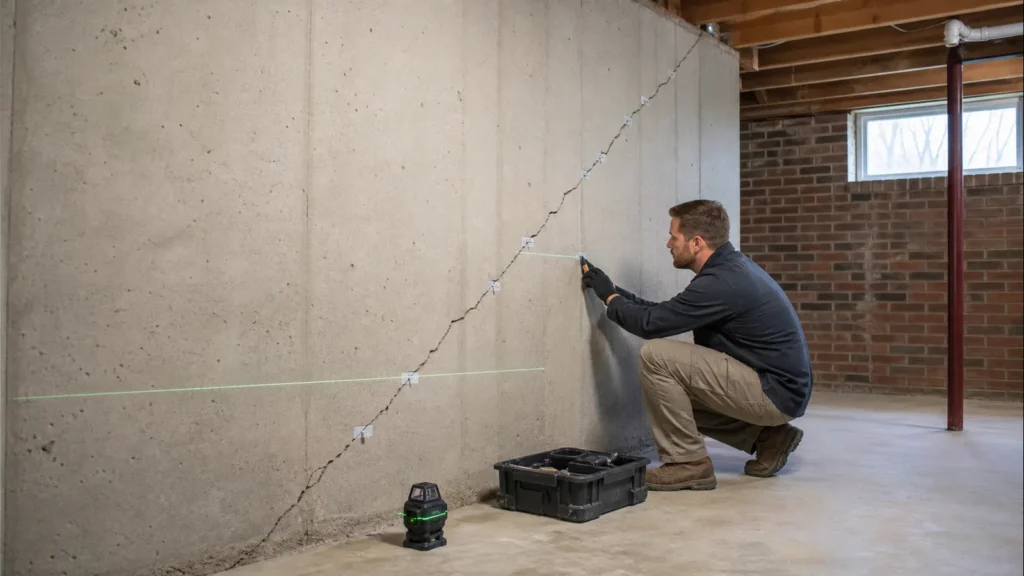
Cracked-wall repair should address both the wall’s condition and the force or movement behind it. Crack mapping, wall alignment, moisture, foundation support, materials, and change over time determine whether monitoring, stabilization, restoration, or foundation work is appropriate.
How to Prepare for a House Leveling Evaluation in Boonville
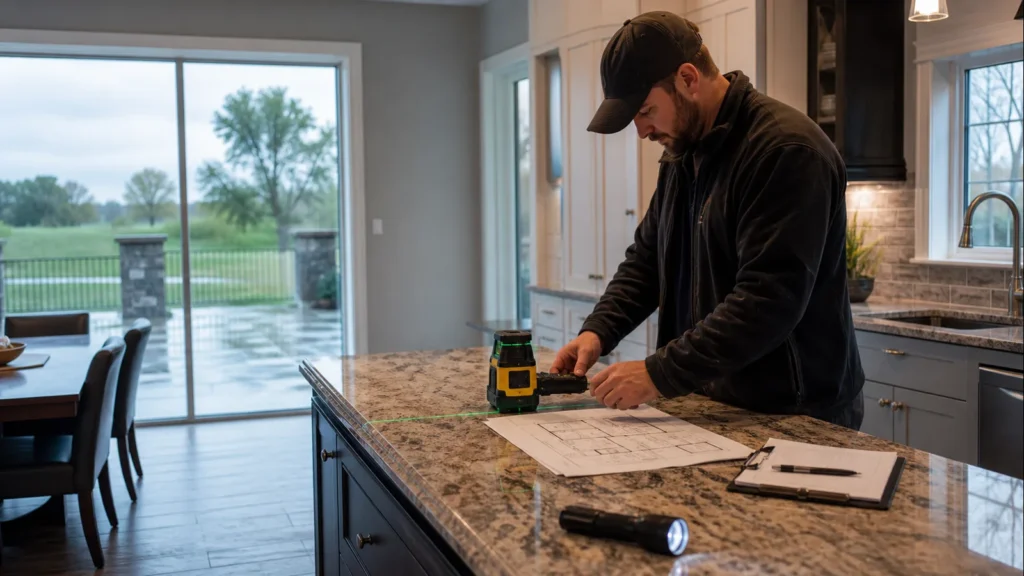
Prepare for a house leveling evaluation by clearing safe access, collecting prior repair records, noting when symptoms changed, and identifying plumbing or drainage events. The evaluator can then compare floor elevations with wall, support, and site conditions.
Pier-and-Beam or Block-and-Base Repair Signs in Boonville
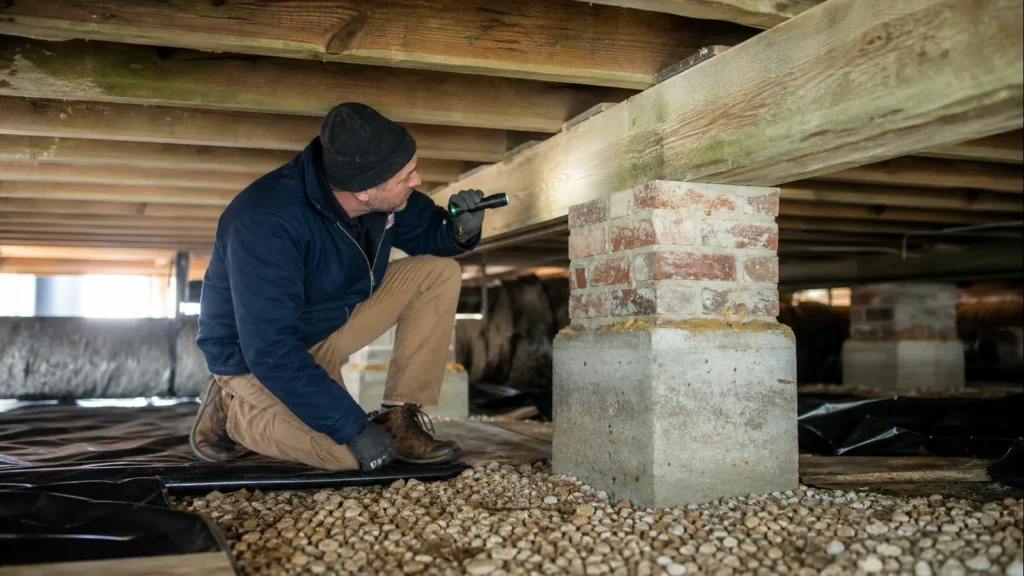
Raised foundations can show trouble through bouncing or sloped floors, damaged beams or joists, shifted supports, moisture deterioration, and door or wall changes above. The underfloor system must be viewed as a connected load path, not a collection of isolated blocks.
Polyurethane Foam vs. Slab Piers for Boonville Properties
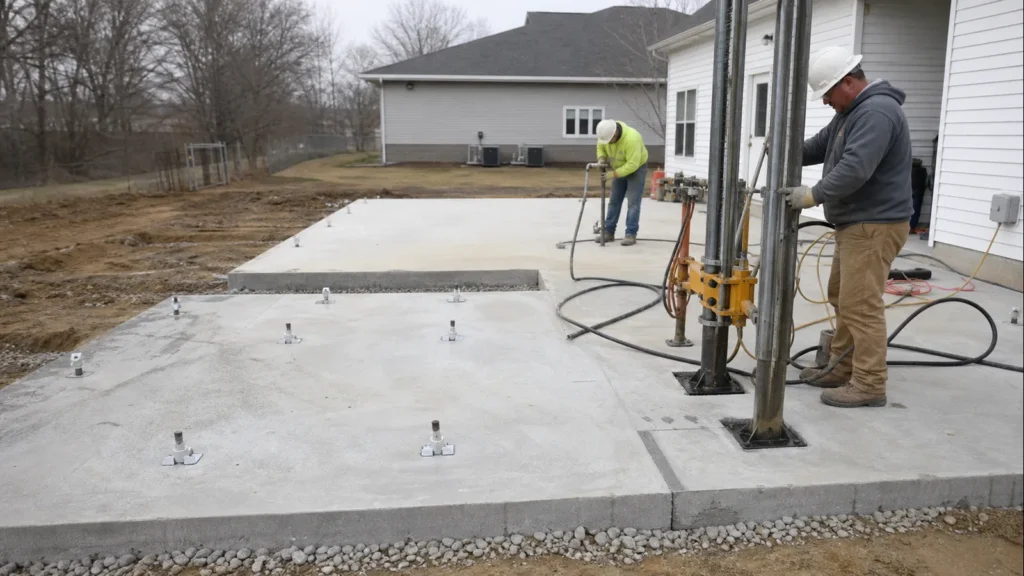
Polyurethane foam and slab piers address different support conditions. Foam can fill voids or lift certain concrete sections, while slab piers transfer structural slab loads to deeper support; an evaluation must determine the load, void, soil, access, and movement pattern.
How Drainage Around a Boonville Home Affects Its Foundation
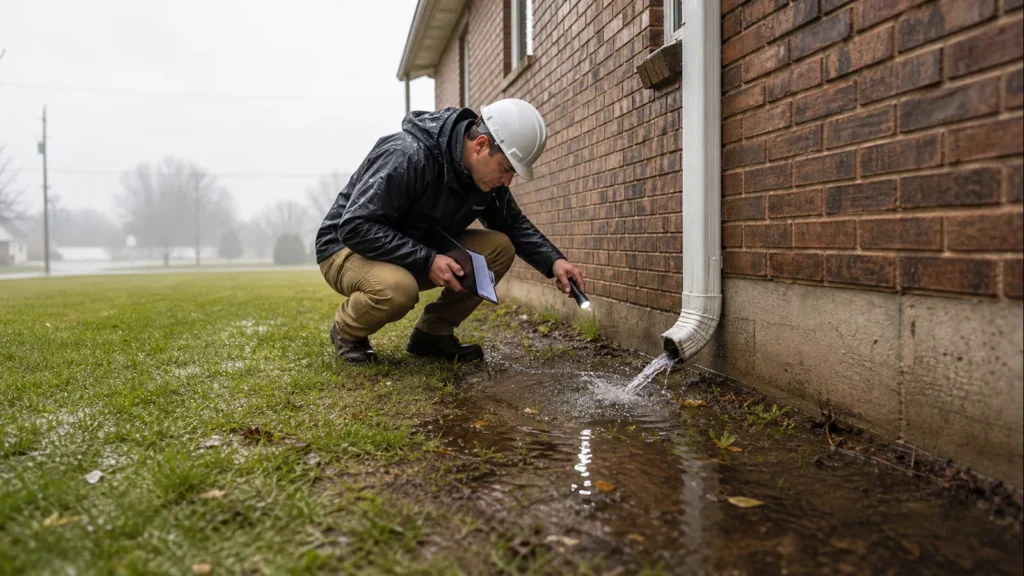
Drainage affects how consistently soil supports a foundation. Concentrated roof runoff, low grading, erosion, or persistent ponding can create uneven moisture conditions, so water should be directed safely away without excavating beside footings or burying exterior materials.
Slab Cracks in Boonville: Cosmetic Change or Foundation Movement?
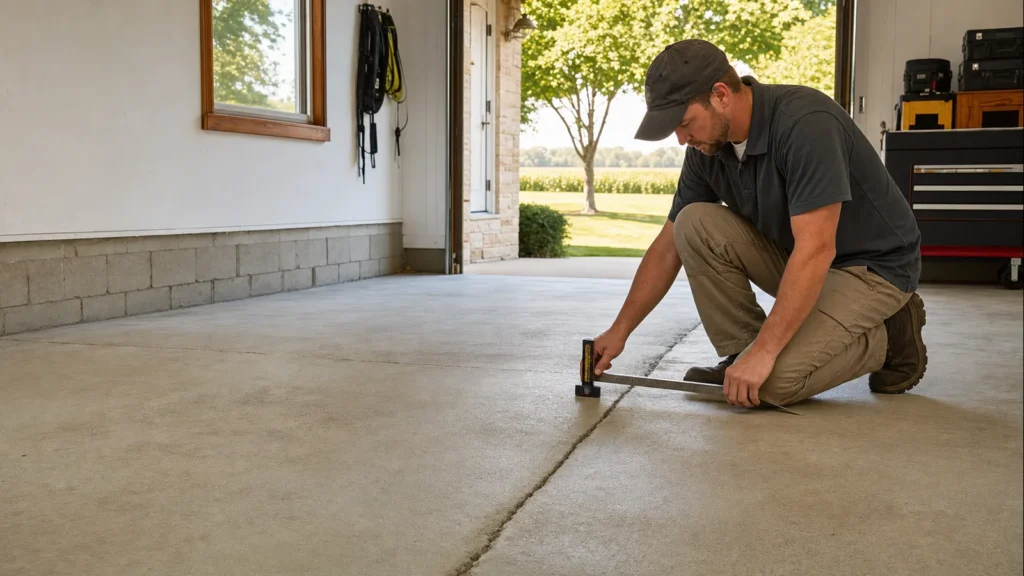
The presence of a slab crack does not by itself define the repair. Width, vertical displacement, location, rate of change, moisture, and connected building symptoms determine whether monitoring, surface repair, support work, or further investigation is appropriate.
Do Sticking Doors and Windows Mean Foundation Trouble in Boonville?
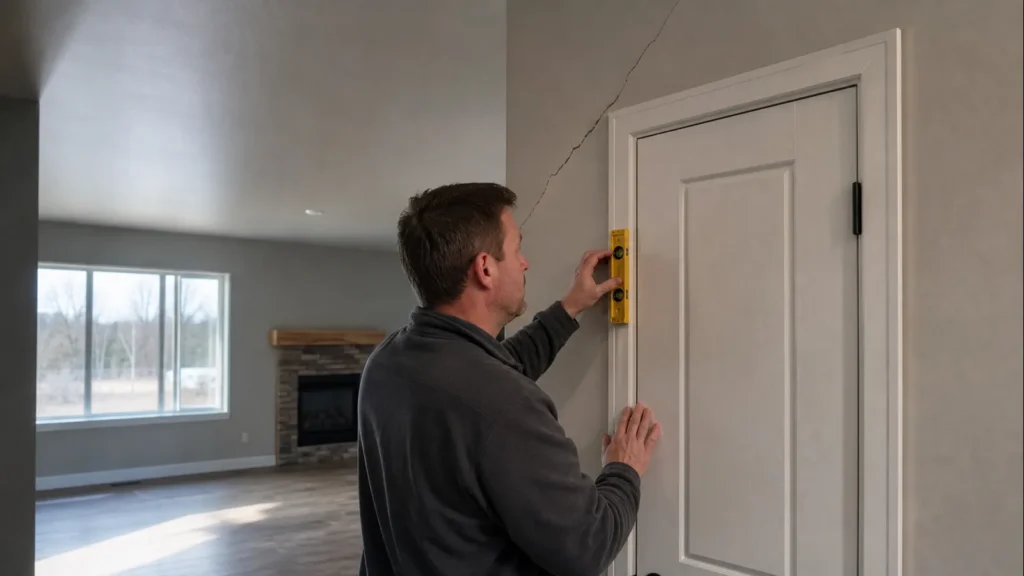
One sticking door can result from humidity, hardware, or normal framing movement. Several openings changing at once—especially with diagonal drywall cracks, floor slope, or exterior separation—create a stronger reason to evaluate the structure.
When Uneven Floors May Signal Foundation Movement in Boonville
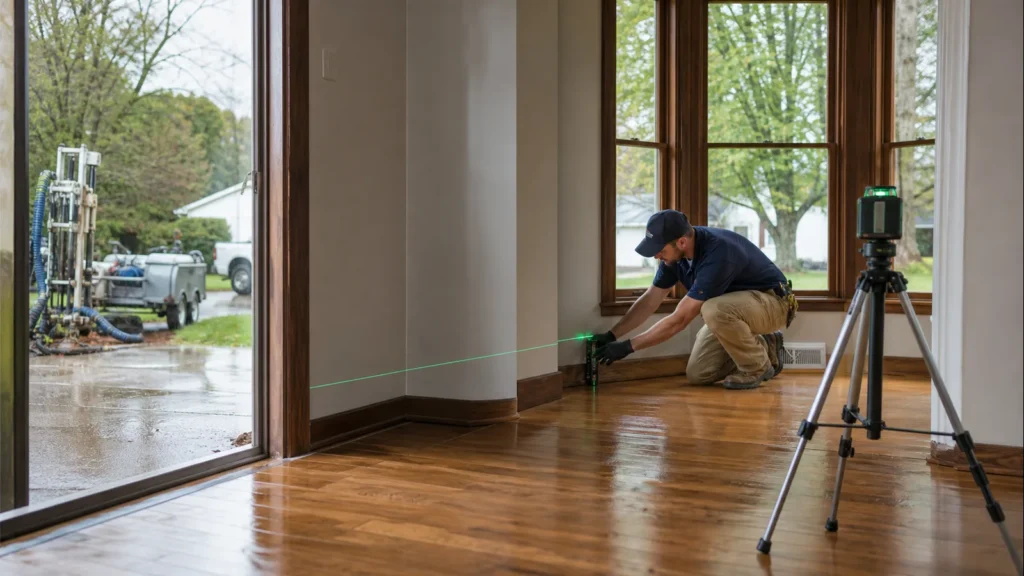
An uneven floor deserves closer attention when the slope is new, growing, localized near a support line, or accompanied by wall cracks, bouncing, trim gaps, or sticking doors. Floor elevation measurements and the home’s foundation type help identify the next step.
Stair-Step Cracks in Boonville Brick Homes: What They Can Mean
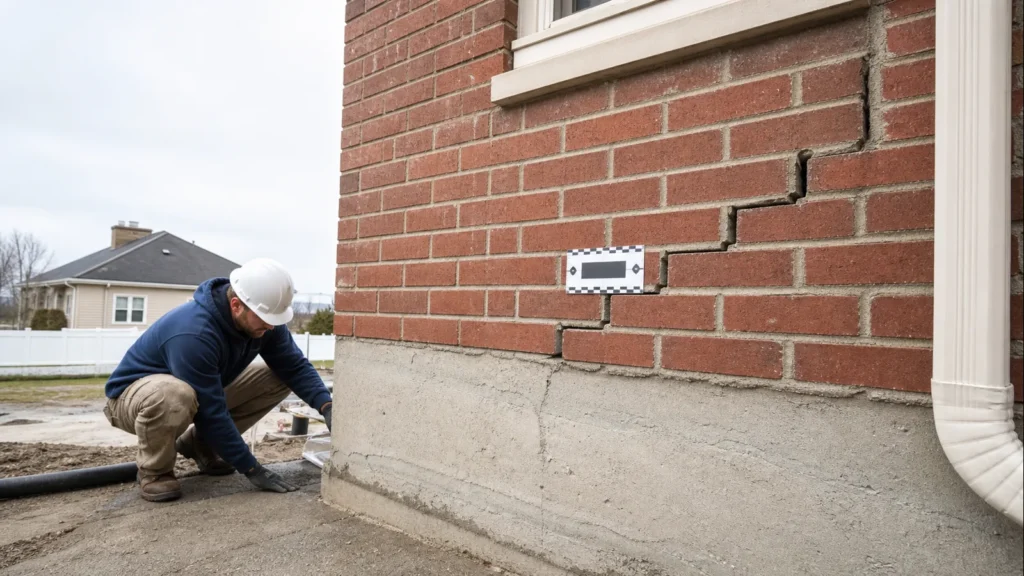
A stair-step crack follows mortar joints, but its meaning depends on width, offset, direction, location, and whether it changes. It may reflect ordinary material movement or differential support, so the crack pattern must be evaluated with the surrounding wall and foundation.
9 Foundation Warning Signs Boonville Homeowners Should Track
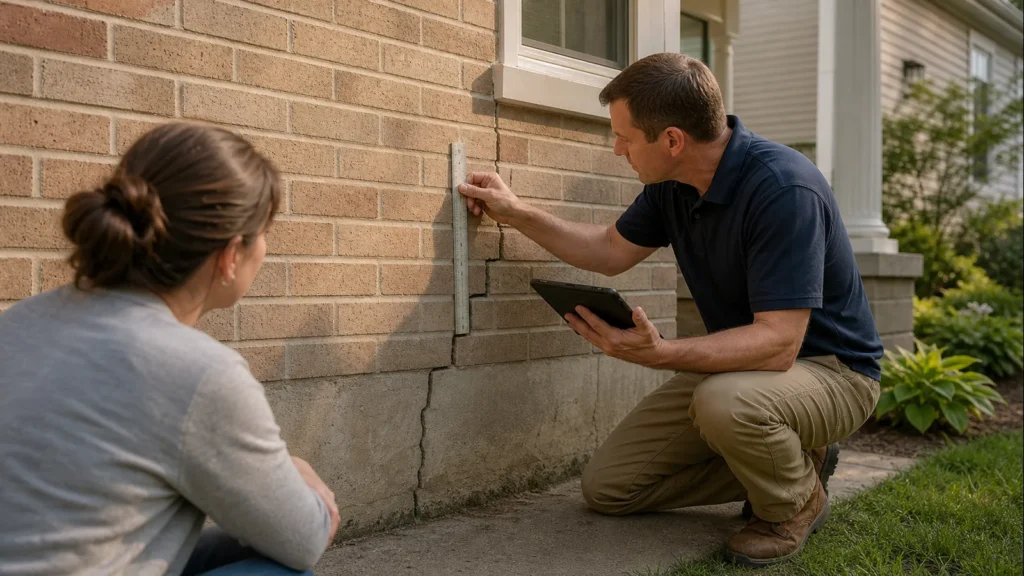
Boonville homeowners should track changes that appear together or worsen over time: stair-step masonry cracks, uneven floors, sticking openings, trim gaps, rotating walls, recurring water intrusion, slab displacement, chimney separation, and soil pulling away from the structure.